Domestic Hot Water Specialists • Brooklyn, NY
Water Heater Repair in Homecrest, Brooklyn
Losing consistent hot water disrupts essential daily routines across any Brooklyn household. Whether dealing with sudden pilot outages, fluctuating shower temperatures, or water pooling around your tank base, we deliver prompt, professional water heater repair in Homecrest, Brooklyn, restoring safe domestic hot water quickly and efficiently.
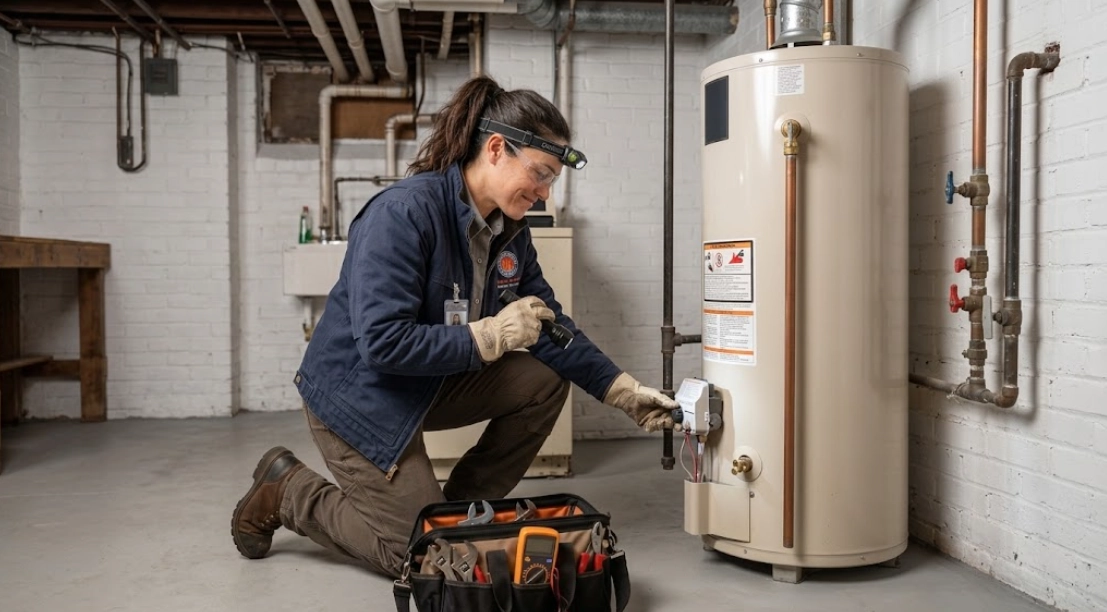
Diagnosing Domestic Hot Water Breakdowns in Homecrest Homes
In the residential neighborhoods surrounding Kings Highway, Avenue U, and Ocean Parkway, domestic water heating equipment varies widely. Properties range from standalone atmospheric gas water heaters and compact electric tank units to high-recovery commercial storage tanks and indirect water heaters piped directly into central hydronic heating boilers.
When a water heater fails, discerning property owners contact our dedicated water heater repair Homecrest Brooklyn team. Heating failures involve gas valves, electrical circuits, and pressurized domestic water lines, requiring precise troubleshooting. Our mechanics arrive fully equipped with replacement thermocouples, thermopiles, electronic ignition modules, gas control valves, and heavy-duty heating elements to resolve failures safely on the first visit.
Immediate Leak Containment Instructions
If your water heater is actively leaking onto your basement or utility room floor, turn the cold-water inlet valve located directly above the tank clockwise until it stops. Shut off electrical breakers or turn the gas control knob to 'OFF', and call our emergency team at (315) 202-8009.
Comprehensive Diagnostics for Gas and Electric Systems
Our mechanical technicians deliver specialized service across all types of domestic water heating configurations:
Atmospheric & Power-Vent Gas Heaters
We test pilot assemblies, replace faulty thermocouples and thermopile millivolt generators, calibrate Honeywell gas valves, and inspect motorized power-vent blowers and draft hoods to ensure proper exhaust expulsion.
Electric Storage Water Heaters
We test upper and lower thermostats, diagnose burned-out high-watt-density immersion heating elements, and verify high-limit safety cutoffs to restore rapid water heating without tripping circuit breakers.
Indirect Water Heaters Piped to Boilers
For homes with indirect tanks heated by the central boiler, we inspect zone circulators, internal heat exchanger coils, and aquastat temperature controllers to ensure domestic water heats efficiently year-round.
Temperature & Pressure (T&P) Relief Valves
We test and replace ASME-rated T&P relief valves designed to protect your home from catastrophic over-pressurization, ensuring discharge pipes drain safely toward the floor without weeping.
Common Warning Signs Your Water Heater Needs Professional Attention
Recognizing early warning signs prevents sudden cold-shower emergencies and catastrophic tank flooding:
- Inconsistent or Rapidly Depleting Hot Water: If your shower turns cold after five minutes, a broken plastic dip tube or a burned-out lower electric heating element is typically the cause.
- Rumbling and Popping Sounds: Heavy mineral scale settles on the tank bottom, trapping water underneath that violently flashes to steam, stressing the steel tank shell.
- Rusty or Discolored Hot Water: If hot water runs brown or orange while cold water remains crystal clear, the sacrificial magnesium anode rod has dissolved and the internal steel tank is corroding.
- Foul Rotten-Egg Odors: A decaying anode rod interacting with sulfur-reducing bacteria in domestic water supplies produces hydrogen sulfide gas; replacing it with an aluminum-zinc rod remedies the odor.
- Persistent Pilot Outages: A dirty pilot orifice, degraded thermocouple, or thermal switch lockout will prevent the main burner from igniting.
Repair vs. Replacement: Knowing When to Invest
Understanding whether to repair or replace your water heater comes down to the source of the failure. Components like thermocouples, gas control valves, electric elements, dip tubes, and relief valves can be replaced quickly and affordably.
However, if water is weeping through the bottom outer jacket of the tank, the internal glass-lined steel tank has developed a structural crack due to corrosion. Tank ruptures cannot be patched or welded safely under NYC plumbing codes; an actively leaking tank requires immediate replacement to avoid extensive structural water damage.
Integrating Water Heating with Homecrest Boiler Infrastructure
In many South Brooklyn homes, domestic water heating is tied directly to the heating boiler via an internal tankless coil or an external indirect storage tank. If your heating boiler has boiler-water leaks or low pressure, your domestic hot water will suffer simultaneously.
If your central heating system is experiencing operational lockouts, consult our specialized boiler repair in Homecrest team. If your heating equipment requires complete modernization, learn about our engineered boiler replacement options. For properties requiring dedicated gas line piping or pressure testing for high-recovery gas water heaters, explore our certified gas line repair and inspection services.
Preventative Maintenance Recommendation
Flushing several gallons of water from your tank's bottom drain valve every six months removes sediment and prolongs tank lifespan. Have a licensed professional check your sacrificial anode rod every three years to prevent internal tank corrosion.
Frequently Asked Questions About Water Heater Repair
Immediately shut off the cold-water inlet valve located on the supply pipe directly above the heater. Turn the gas control knob to 'OFF' or switch off the dedicated electrical breaker. Call our dispatch line immediately to determine if the leak is from a replaceable fitting or an internal tank rupture.
On gas heaters, this is often caused by a broken dip tube inside the tank. The dip tube directs incoming cold water to the bottom; when it cracks, cold water mixes directly with hot water at the top. On electric heaters, a burned-out upper or lower electric heating element produces rapid hot water depletion.
Rumbling noises are caused by heavy mineral scale and sediment that settles at the bottom of the tank over years of service. Water becomes trapped beneath this mineral layer and boils into steam bubbles, popping loudly as they break through the sediment.
An indirect water heater does not have its own burner. Instead, hot water from your central heating boiler is pumped through an internal heat exchanger coil inside an insulated storage tank, providing high-efficiency domestic hot water without an extra flue chimney penetration.