Non-Invasive Diagnostic Locating • Brooklyn, NY
Leak Detection in Homecrest, Brooklyn
Concealed water leaks inside walls, ceilings, subfloors, and subterranean boiler lines cause catastrophic structural rot, mold infestation, and inflated water bills if left undetected. We deliver precision non-invasive leak detection in Homecrest, Brooklyn, deploying thermal imaging, acoustic listening sensors, and pressure testing to locate hidden leaks without unnecessary demolition.
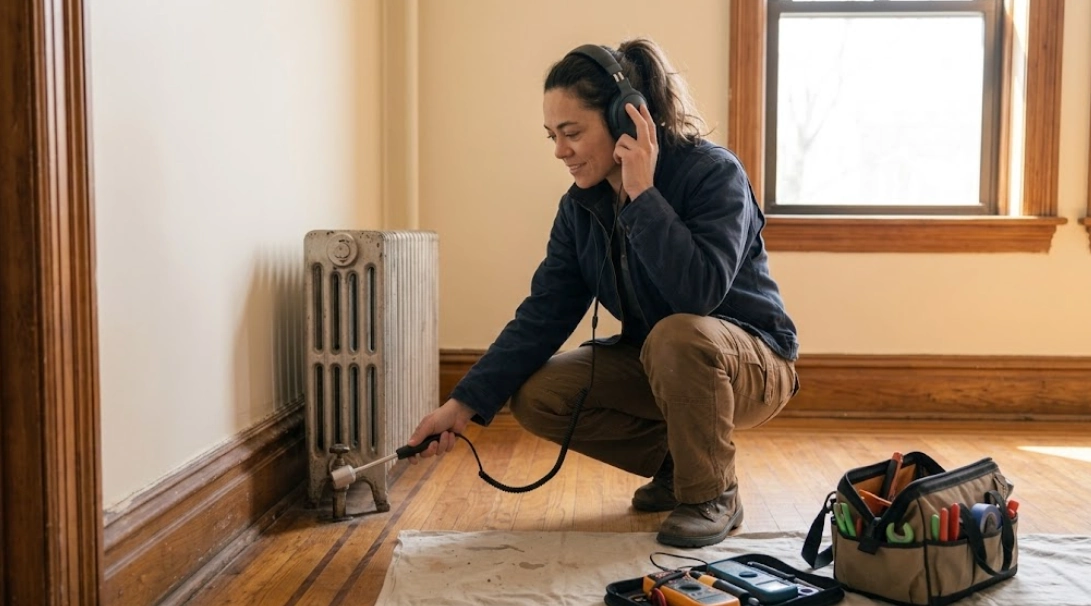
Precision Leak Locating Across Historic & Modern Brooklyn Properties
Water is an insidious force in multi-family and single-family structures across Homecrest, Sheepshead Bay, and Gravesend. Due to gravity, surface tension, and building framing, moisture rarely emerges directly beneath the point of origin. A pinhole leak on a third-floor bathroom water riser can travel horizontally along a steel joist or electrical conduit, manifesting as a water stain thirty feet away on a first-floor living room ceiling.
When mysterious dampness appears, guessing and tearing open large sections of historic plaster or custom tilework is destructive and costly. Our specialized leak detection Homecrest Brooklyn service employs forensic methodology and non-destructive diagnostic tools to isolate the exact point of pipe failure, preserving building finishes while facilitating rapid repairs.
Active Water Emergency Protocol
If water is actively streaming through a ceiling, pooling around electrical fixtures, or wetting your boiler's electrical controls, close the main apartment shutoff valve immediately. Shut off circuit breakers to wet areas, and call our direct dispatch line at (315) 202-8009.
Advanced Non-Invasive Diagnostic Technologies
We deploy multiple complementary technologies to confirm the exact location and nature of hidden leaks:
Infrared Thermal Imaging
High-resolution thermographic cameras detect microscopic temperature differentials on wall and ceiling surfaces, mapping the hidden path of evaporative cooling from cold-water leaks or heat plumes from hot-water and heating lines.
Acoustic Electronic Listening
Pressurized water escaping through a fractured pipe generates distinct ultrasonic frequencies. Our acoustic ground microphones and contact probes amplify these sound signatures through concrete slabs, tile, and hardwood floors.
Calibrated Moisture Mapping
Non-penetrating dielectric moisture meters measure moisture gradients deep within plaster, drywall, and subflooring without leaving holes, pinpointing the perimeter of saturated building materials.
System Isolation & Pressure Drop Testing
By capping individual plumbing branches and applying digital pressure gauges, we systematically isolate domestic supply lines, hydronic heating loops, and boiler return piping to confirm which system is leaking.
Common Signs of Concealed Plumbing Leaks
Property owners should stay alert to these subtle indicators of concealed water loss:
- Ceiling Water Rings and Sagging Plaster: Discolored brown rings, peeling latex paint blisters, or soft drywall beneath second-story bathrooms or heating risers.
- Unexplained Spikes in Municipal Water Bills: Continuous water loss without a noticeable change in household water consumption indicates an active underground or in-wall leak.
- Continuous Boiler Makeup Water Feeding: If your steam boiler's automatic feeder is clicking on frequently, your buried wet return lines are leaking water beneath the concrete slab.
- Persistent Musty Odors & Hidden Mold: Organic mold colonies thriving behind baseboards, under floorboards, or inside pipe chases before surface moisture becomes visible.
- Warm Flooring Patches: A localized warm area on a tile or hardwood floor indicates a hot-water domestic supply line breach or hydronic radiant tube fracture.
Realistic Diagnostic Expectations & Transparent Repair Planning
While advanced electronic instruments allow us to narrow down a leak source to within a few inches, no responsible technician promises that every leak can be diagnosed and repaired with zero demolition. Diagnostic tools identify where the pipe is leaking; to physically replace the damaged section, a small, controlled access opening must be made.
The immense value of non-invasive leak detection lies in precision containment. Instead of demolishing an entire bathroom wall or tearing up ten feet of finished floor, our mechanics make a clean, localized access hatch directly over the compromised fitting, drastically reducing structural disruption and restoration costs.
Connecting Leak Detection with Boiler and Heating Protection
Hidden leaks are particularly hazardous to central heating infrastructure. When steam return lines or hydronic baseboard loops suffer hidden corrosion, the boiler continuously draws fresh oxygenated water to replace the loss. This continuous influx of raw water accelerates internal boiler rust, leading to cracked heat exchanger sections.
If your boiler is losing water pressure or shutting down on low-water alarms, explore our comprehensive boiler repair in Homecrest services. When radiator valves or pipes are weeping throughout your home, consult our steam heat and radiator repair technicians. For sluggish waste lines that back up water into wall cavities, our drain cleaning specialists are ready to assist.
Coordination with Neighbors and Supers
In multi-family buildings and co-ops, moisture on a lower-floor ceiling almost always originates from fixtures or risers in the unit above. Coordinating access with building superintendents and upstairs residents ensures a swift, non-invasive investigation.
Frequently Asked Questions About Leak Detection
Pressurized water escaping from a pinhole breach or cracked joint generates distinct high-frequency sound vibrations as water forces its way through the pipe orifice. Our technicians use sensitive ground microphones and acoustic listening discs to trace this ultrasonic signature to the exact location of the breach.
Non-invasive diagnostic tools—including thermal imaging, acoustic sensors, and moisture meters—narrow down the suspected source area with high precision. However, once the source is pinpointed, a small, targeted access opening must be made to physically access and repair the compromised pipe.
In older steam heating systems, buried wet return lines run beneath concrete basement slabs. Over decades, acidic condensate corrodes the steel or cast-iron from the inside out, causing water to weep directly into the soil beneath the slab without creating surface puddles.
Place buckets beneath the leak and carefully puncture small paint blisters with a pencil to prevent heavy drywall collapse. Immediately notify building management or your upstairs neighbor to cease water usage, and call our diagnostic team to test upstairs fixtures and shared risers.