Steam Balancing • Brooklyn, NY
Steam Heat & Radiator Repair in Homecrest, Brooklyn
Uneven heat distribution, cold cast-iron radiators, hissing air vents, and violent metallic pipe clanging disrupt comfort across Brooklyn residences every winter. We deliver specialized steam heat and radiator repair in Homecrest, Brooklyn, correcting improper pitch, replacing defective air valves, and balancing heating loops for quiet, even warmth.
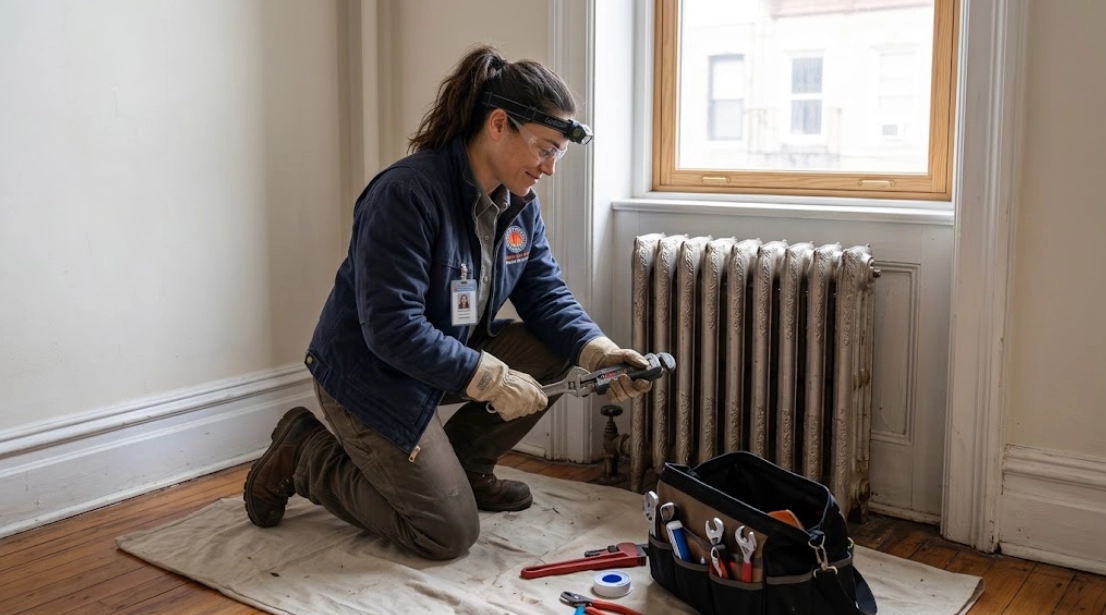
Diagnosing Chronic Steam Radiator Problems in South Brooklyn
Classic brick row houses and apartment buildings throughout Homecrest, Sheepshead Bay, and Midwood rely predominantly on low-pressure one-pipe steam heating systems. While steam is an exceptionally robust and durable heating method, it operates on a delicate balance of gravity, thermal dynamics, and air displacement.
When a resident struggles with cold rooms or leaking valves, seeking experienced radiator repair Homecrest Brooklyn is critical. Attempting DIY repairs on hot, pressurized steam fixtures risks severe scalding burns or stripping fragile antique pipe spuds. Our licensed heating technicians systematically diagnose air vents, angle valves, main line vents, and piping slopes to restore smooth, noiseless operation.
Radiator Leak Safety Warning
Never attempt to unscrew a radiator valve, packing nut, or air vent while the boiler is running or steam pressure is present in the line. Escaping steam reaches 212°F and causes severe thermal injury. For safe valve repackings and leak repairs, contact our service desk directly at (315) 202-8009.
Key Radiator Failure Points and Diagnostic Solutions
Most steam heating discomfort originates from specific mechanical components that degrade over decades of thermal cycling:
Air Vent Malfunctions & Vent Sizing
Radiators cannot heat until cold air escapes. When air vents freeze shut with corrosion or paint, the radiator stays ice cold. Conversely, if vents fail open, steam continuously escapes into the room. We calibrate and install premium vents with precise orifice sizing to balance heat across all floors.
Radiator Angle Valve Leaks & Stem Packing
Angle shutoff valves frequently weep water around the valve stem when reopened each autumn. We repack valve stems with graphite packing or install new heavy-duty bronze steam valves with ground-joint spuds to prevent hardwood floor rot.
Pitch Correction (Eliminating Steam Hammer)
In a one-pipe steam system, steam travels up and returning condensed water flows down through the very same pipe. Radiators must slope downward toward the supply valve at least one-quarter inch per ten feet. We relevel settling radiators using solid composite shims to eliminate water trapping.
Basement Main Line Venting
If first-floor radiators get scorching hot while top-floor radiators stay cold, the building's basement steam main vents have failed. Installing large-capacity quick-vents allows steam to fill main headers quickly and arrive at all risers simultaneously.
Understanding One-Pipe Steam vs. Hydronic Hot-Water Radiators
It is vital to distinguish between steam radiators and hydronic hot-water radiators, as their maintenance protocols differ substantially:
- One-Pipe Steam Radiators: Feature a single large pipe connected at the bottom with an angle shutoff valve and an automatic air vent on the opposite side about one-third up the height. They require strict on/off valve operation and precise downward pitch toward the pipe connection.
- Two-Pipe Steam Radiators: Feature a supply valve on one end and a thermostatic steam trap on the opposite lower end connected to a dedicated condensate return pipe. Traps must close when steam arrives to prevent steam from blowing into return mains.
- Hydronic Hot-Water Radiators / Baseboards: Feature two pipes (supply and return) filled continuously with circulating hot water. They utilize small manual coin-operated air bleeder screws rather than automatic steam vents, requiring periodic bleeding to purge airlocks.
Thermostatic Radiator Valves (TRVs): Modern Comfort Control
One of the most common complaints among Homecrest co-op and apartment residents is overheating. Because conventional steam valves cannot be partially throttled, occupants are often forced to open windows in the dead of winter, wasting enormous amounts of fuel.
We solve overheating by installing specialized one-pipe steam Thermostatic Radiator Valves (TRVs). These precision valves attach directly to the air vent port, allowing occupants to dial in a desired room temperature. When the room reaches the set comfort level, the TRV closes the air vent, holding steam out until the room cools down naturally.
Integrating Radiator Services with Central Boiler Maintenance
Persistent radiator issues frequently indicate underlying boiler health problems. If radiator air vents are constantly spitting rusty water, your central boiler may be suffering from surging water levels caused by high mineral solids or oil contamination in the boiler water.
If your boiler burner fails to respond to heating demands, consult our comprehensive boiler repair in Homecrest team. When an antique boiler is beyond repair, our engineers handle full boiler replacement and near-boiler piping reconstruction. For hidden water leaks beneath subfloors or around riser chases, learn about our non-invasive leak detection services.
Seasonal Pre-Winter Maintenance Tip
Before turning on your heating system each autumn, ensure every radiator valve is turned fully counter-clockwise to the completely open position. Verify that furniture or drapes do not block air vents, and check the floor beneath valves for signs of weeping packing nuts.
Frequently Asked Questions About Steam Heat & Radiator Repair
In a one-pipe steam system, steam cannot enter a radiator unless the cold air trapped inside is vented out. If the radiator air vent is stuck closed with mineral scale, corrosion, or painted over, air remains trapped inside, locking steam out completely. Replacing the failed air vent restores immediate heat.
Violent banging—known as steam hammer—occurs when high-velocity steam collides with pockets of condensed water trapped in the radiator or branch piping. This is almost always caused by an improper radiator pitch (sloping away from the valve rather than toward it) or a partially closed supply valve that impedes returning water.
No. On a one-pipe steam system, the radiator supply valve must always be fully open or fully closed. Partially closing the valve creates a restricted orifice where returning condensate collides with incoming steam, causing immediate valve weeping and severe water hammer. To regulate temperature safely, install a thermostatic radiator vent (TRV).
Air vents contain an internal thermal float that is supposed to seal shut when hot steam arrives. If the float valve is clogged with boiler sludge, corroded, or if the boiler's internal water level is surging violently due to dirty boiler water, water will spray out of the vent and damage flooring.