Residential Heating Specialists • Kings County, NY
Boiler Repair in Homecrest, Brooklyn
When winter arrives in South Brooklyn, a dependable heating system is essential for your family's safety and comfort. Whether your radiators remain cold, your burner locks out, or your system makes loud metallic banging noises, we deliver prompt, professional boiler repair in Homecrest, Brooklyn, diagnosing complex steam and hydronic boiler failures with precision.
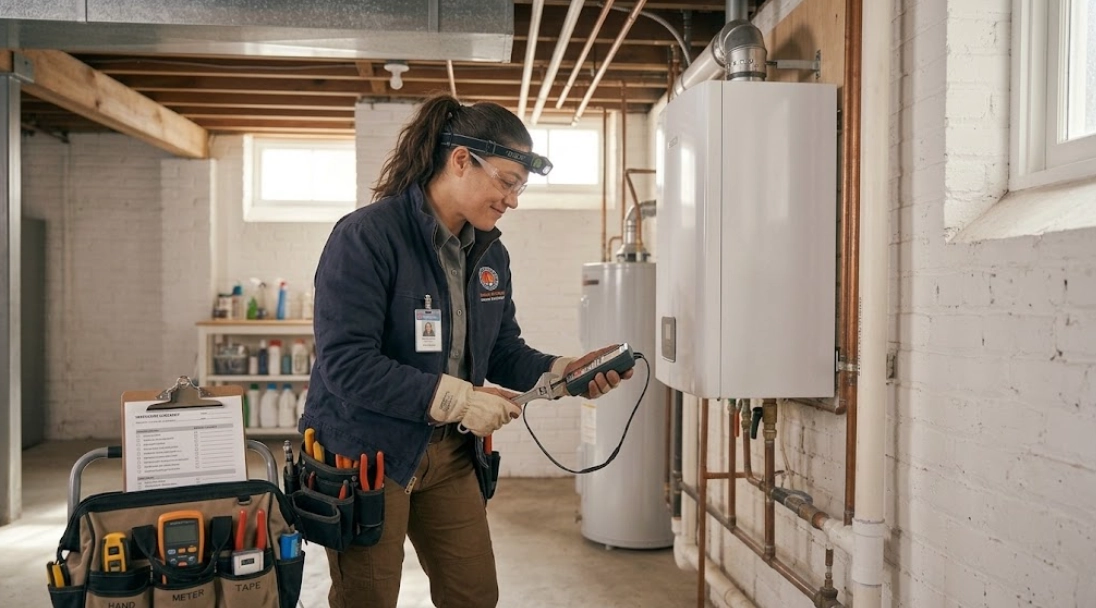
Restoring Heat and Safety in Homecrest Residential Properties
Homecrest is defined by its architectural heritage—from multi-family brick row houses and detached two-family residences along Ocean Parkway and East 15th Street to post-war apartment complexes near Kings Highway and Avenue U. The vast majority of these homes rely on central natural gas heating systems: either classic low-pressure one-pipe steam boilers or hydronic hot-water distribution loops.
When temperatures plummet, facing a sudden no heat boiler repair Homecrest Brooklyn call requires immediate, structured diagnostic evaluation. Heating failures rarely happen without warning; they often develop gradually from failing low-water cutoffs, clogged pigtail siphons, airbound radiators, or faulty gas ignition controls. Our mechanics arrive equipped with the diagnostic instrumentation and replacement components needed to pinpoint the fault quickly and restore safe heat.
Urgent Heating Emergency Advice
If your boiler fails during freezing weather, never attempt to bypass safety switches or manually force gas burner valves. If you smell unburned natural gas, leave the building immediately and dial 911 or National Grid from outside. For urgent mechanical troubleshooting and burner service, call our dispatch line directly at (315) 202-8009.
Steam vs. Hot-Water Hydronic Boilers: Key Diagnostic Differences
Diagnosing boiler problems requires recognizing that steam heating and hydronic hot-water systems operate under completely different mechanical principles:
One-Pipe Steam Systems
Steam systems boil water inside cast-iron sections to generate vapor that expands up risers into cast-iron radiators, pushing air out through radiator air vents. Key components include the water gauge glass, automatic water feeder, low-water cutoff (LWCO), and the pressuretrol controller, which must be calibrated to operate at low pressure (typically 0.5 to 1.5 PSI).
Hydronic Hot-Water Systems
Hydronic boilers keep the entire piping loop and baseboard radiators filled with pressurized water (typically 12–15 PSI cold). An electric circulator pump circulates heated water through zones. Expansion tanks, automatic air purgers, flow check valves, and backflow preventers maintain system equilibrium without generating steam vapor.
For owners of vintage steam infrastructure, our specialized steam boiler repair Homecrest Brooklyn services focus on water quality, skimming oil film from the boiler water line, clearing clogged pigtail pressure switches, and verifying float-type and probe-type low-water cutoffs. In hydronic systems, our technicians deliver precision hot water boiler repair Homecrest Brooklyn, addressing waterlogged expansion tanks, seized circulator pumps, and airlocked heating zones that leave baseboards lukewarm.
Checklist of Common Heating Symptoms and Warning Signs
Homeowners and property managers should monitor their heating equipment for these telltale indications of impending failure:
- Cold Radiators Despite Boiler Running: On steam systems, a stuck radiator air vent prevents steam from entering the radiator body. On hydronic systems, trapped air in high-point loops prevents water circulation.
- Violent Pipe Banging (Water Hammer): Occurs when steam encounters trapped condensate pooling in sagging pipe mains or unpitched radiators.
- Burner Short-Cycling: When the burner fires for just a few minutes and shuts down repeatedly, a clogged pressuretrol pigtail or improper differential setting is frequently the culprit.
- Water Pooling Around the Boiler Base: Water discharge from the pressure relief valve indicates over-pressurization, a ruptured expansion tank, or a compromised cast-iron boiler section.
- Frequent Low-Water Lockouts: If an automatic feeder is continuously adding fresh makeup water, your system has an active hidden leak in buried return lines or underground piping.
What to Expect During a Professional Diagnostic Visit
When our technician evaluates your heating system in Homecrest, we execute a methodical inspection rather than guessing at parts:
- Operational Combustion & Flame Analysis: We inspect burner tubes, pilot assemblies, spark igniters, and flame rectification sensors on modern electronic ignition setups, ensuring reliable burner firing for your gas boiler repair Homecrest Brooklyn needs.
- Safety Control Verification: We test the low-water cutoff by simulating low-water conditions, ensuring the fuel supply is instantly terminated before the boiler can dry-fire.
- Pressure Regulation & Relief Valve Testing: We check gauge accuracy and inspect the ASME pressure relief valve for weeping, corrosion, or scale accumulation.
- Venting & Flue Draft Inspection: We evaluate the draft hood, flue pipe, and chimney connection to confirm combustion gases and carbon monoxide are drafting safely outside the dwelling.
- Distribution Balance & Radiator Pitch: We check visible radiator connections, shutoff valves, and air vents to ensure even heat distribution across every room.
If your heating unit suddenly locks out on a bitter winter evening and you discover your boiler not working Homecrest Brooklyn home, our dispatchers coordinate immediate technical evaluation. We also respond quickly to heating issues in neighboring communities, providing trusted boiler repair near Sheepshead Bay residential blocks and prompt boiler repair near Gravesend apartment buildings.
Repair vs. Replacement: Making the Right Mechanical Decision
Not all boiler failures can or should be repaired. While ignition modules, circulator pumps, gas control valves, and low-water cutoffs are easily replaced, an aging cast-iron heat exchanger that has developed internal stress cracks cannot be safely welded. Continuous addition of oxygenated fresh water causes internal rust tuberculation, dramatically reducing heat transfer and leading to premature tank breach.
When equipment exceeds 20 to 25 years of age or repair costs approach the price of a modern system, our team provides transparent guidance on our dedicated boiler replacement services. Modern boilers achieve significantly higher AFUE efficiency ratings, dramatically lowering monthly winter gas bills while providing quiet, balanced heat.
Related Heating and Plumbing Services in Homecrest
Your central boiler does not operate in isolation; it interacts directly with your building's fresh water supply, gas infrastructure, and drainage lines. We provide comprehensive mechanical services to keep your entire property operating smoothly:
To discover our full regional coverage across South Brooklyn, visit our dedicated Service Areas directory, or speak directly with our dispatch team on our Contact page.
Frequently Asked Questions About Boiler Repair
First, verify that your thermostat is set above room temperature and calling for heat. For a steam system, check the glass gauge glass on the boiler side to ensure water is visible between one-half and two-thirds full; modern low-water cutoffs will lock out the burner if water drops too low. For hydronic hot-water systems, inspect the pressure-temperature gauge to confirm system pressure is between 12 and 15 PSI cold.
Loud banging or 'steam hammer' occurs when steam meets standing water trapped in the distribution mains or radiator branches. This happens when radiators lose their proper downward pitch toward the steam valve, air vents fail to open, or the boiler's internal water level surges due to sediment or oil contamination in the boiler water.
Float-type low-water cutoffs should be flushed weekly during the heating season via the blowdown valve until the discharge water runs clear. Electronic probe-type cutoffs should be professionally removed, cleaned of mineral scale, and electrically tested at least once annually during pre-season mechanical maintenance.
A relief valve discharges when system pressure exceeds its rated limit—typically 15 PSI for residential steam boilers and 30 PSI for hot-water hydronic boilers. On hydronic boilers, this is commonly caused by a waterlogged or ruptured diaphragm expansion tank, a defective automatic water feeder, or an internal heat exchanger crack.
When cast-iron heat exchanger sections crack, cast-iron push nipples leak between boiler sections, or severe internal rust scale causes persistent water surging and thermal stress, replacement is usually necessary. If repairs exceed fifty percent of the cost of a modern high-efficiency unit, or if replacement parts are obsolete, replacement provides greater safety and fuel efficiency.